
Learning resources
Ready for school.
Ready to grow.
The kindergarten supply list, trusted school links, and playful ways to keep learning connected at home.
Start with the essentials below, label personal items clearly, and keep home practice short, joyful, and encouraging.
2026–2027 family guide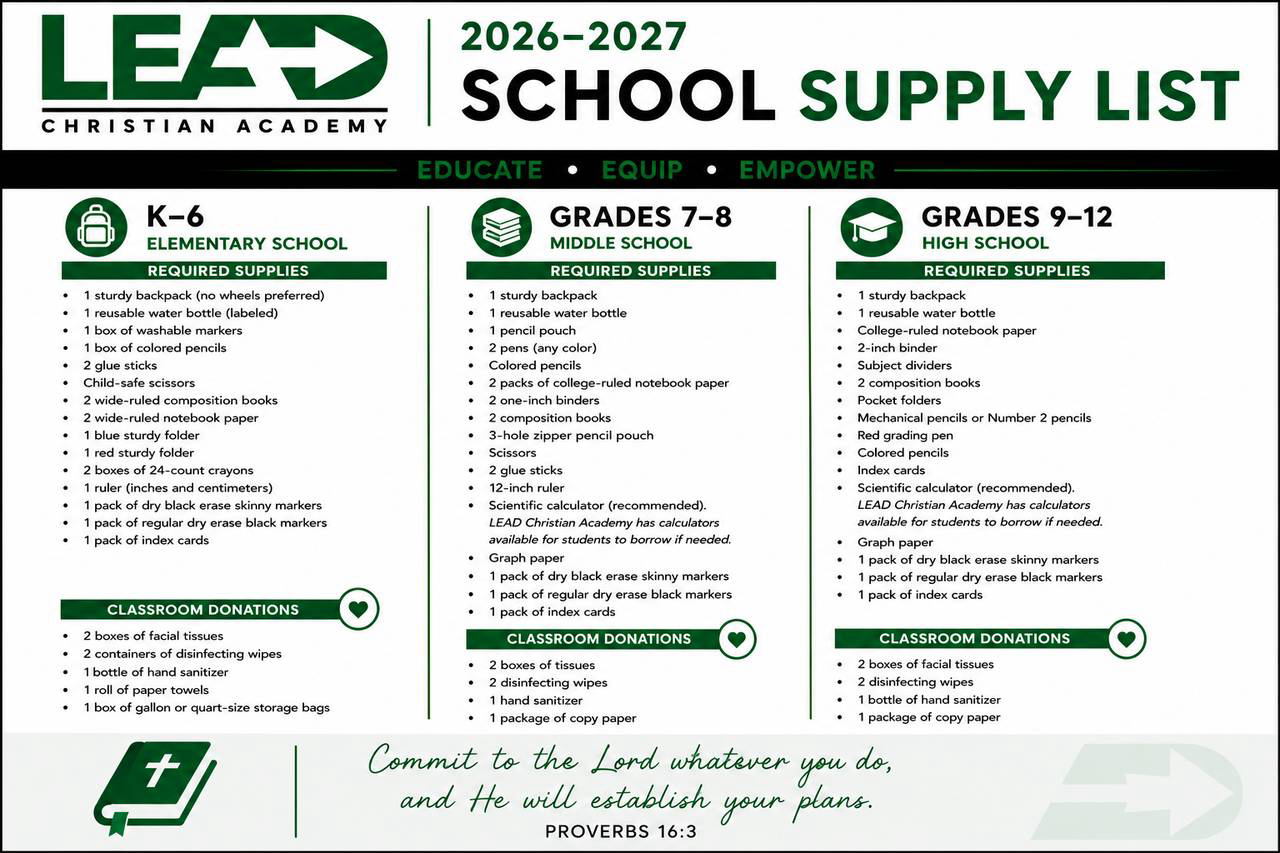
Kindergarten · K–6 elementary
What to
bring.
The kindergarten list follows LEAD's K–6 elementary requirements. Check off items as you prepare for August 3.
- 1 sturdy backpack (no wheels preferred)
- 1 reusable water bottle, labeled
- 1 box of washable markers
- 1 box of colored pencils
- 2 glue sticks
- Child-safe scissors
- 2 wide-ruled composition books
- 2 packs of wide-ruled notebook paper
- 1 blue sturdy folder
- 1 red sturdy folder
- 2 boxes of 24-count crayons
- 1 ruler with inches and centimeters
- 1 pack of skinny black dry-erase markers
- 1 pack of regular black dry-erase markers
- 1 pack of index cards
Help keep our room ready.
- 2 boxes of facial tissues
- 2 containers of disinfecting wipes
- 1 bottle of hand sanitizer
- 1 roll of paper towels
- 1 box of gallon- or quart-size storage bags
Please note: This page highlights the K–6 list used for kindergarten. The official graphic also contains middle- and high-school requirements.
Practice together
Learning links
we love.
Starfall
Playful letter-sound, phonics, and early-reading practice.
Open resource ↗Storyline Online
Read-aloud videos featuring engaging picture books.
Open resource ↗Toy Theater
Simple, visual math tools and games for young learners.
Open resource ↗ABCya Kindergarten
Age-appropriate literacy and math games for extra practice.
Open resource ↗For grown-ups
Family
essentials.
Quick access to trusted school information and the details families ask for most.


Helpful habits
Practice without
pressure.
How long should we practice at home?+
Aim for about ten focused minutes at a time. Stop while it still feels positive, and celebrate effort more than speed.
What matters most for early reading?+
Read aloud every day, talk about the pictures and story, notice sounds in words, and let your child see reading as something joyful.
How can we practice math naturally?+
Count steps, sort laundry, compare snack amounts, look for shapes, and ask your child to explain how they know.